

The best trip is not the one with the longest checklist, but the one that fits your energy, comfort level, budget, mobility, and social style. Planning around personal needs helps you avoid rushed itineraries, wasted money, and experiences that look good on paper but feel wrong once you arrive.
This article takes a practical approach by pairing common traveler needs with 10 specific places and experiences. Instead of generic advice, it shows how to choose travel that supports quiet recovery, easy family pacing, low-stress sightseeing, social connection, gentle nature, or a controlled burst of adventure.
Amsterdam Canal Cruise, Netherlands

Amsterdam’s canal network is one of the most complete ways to read a city in a single hour — the UNESCO-listed waterways link the Golden Age merchant houses, narrow bridges, and hidden courtyards that define the city’s character, all without requiring visitors to navigate crowded cobblestones on foot.
On a morning cruise, passengers can watch cyclists crossing the Magere Brug, spot houseboats with rooftop gardens, and catch the Westerkerk tower rising above the treeline — details that are easy to miss at street level but fall into clear context from the water.
Travel tip: Book the first morning departure for calmer canals, softer light, and fewer large tour groups.
Best time to visit: April to October; weekdays; 9:00-11:00 a.m. sailings.
Ticket price: Typically EUR 16-25 for a standard 60-75 minute cruise.
Lake Bled Sunrise Rowboat, Slovenia

Lake Bled earns its reputation not through crowds or curated attractions but through the kind of stillness that is increasingly hard to find in European tourism — a glacial lake ringed by the Julian Alps, with a small island church and a clifftop castle that look exactly as improbable as photographs suggest.
In the early morning, rowers can pull toward the island through mirror-flat water, listen to bells carry across the lake, and watch mist lift off the surrounding forest at a pace that suits reflection rather than itinerary-checking.
Travel tip: Bring a light jacket and reserve a pletna or self-row boat the evening before during peak summer.
Best time to visit: Late spring to early autumn; sunrise to 8:30 a.m.; September is especially calm.
Ticket price: Lake access is free; rowboat rentals usually start around EUR 20-30 per hour.
Tivoli Gardens, Copenhagen, Denmark

Tivoli is one of the oldest amusement parks in the world, but its appeal stretches well beyond rides — the grounds combine 19th-century pavilions, carefully maintained flower beds, open-air stages, and restaurants that range from casual to Michelin-starred, giving groups with different energy levels multiple reasons to be in the same place at once.
Younger visitors gravitate toward the wooden roller coaster and spinning rides near the entrance, while others can linger over coffee in the gardens or watch street performers in the central square before the evening lights transform the atmosphere entirely.
Travel tip: Buy entry online and do rides first, then return for dinner and evening lights after the main afternoon queues.
Best time to visit: May to September and the Christmas season; weekdays; 10:00 a.m.-1:00 p.m. or after 6:00 p.m.
Ticket price: Entry usually starts around DKK 155; ride passes cost extra.
Alfama Small-Group Food Tour, Lisbon, Portugal

Alfama is Lisbon’s oldest neighborhood, and its steep lanes, tiled facades, and family-run tascas hold a version of the city that larger tourist circuits tend to bypass — a small-group food tour here offers a structured reason to walk those streets while eating petiscos, cured fish, and local wine at spots the guide has cultivated over years.
The social dynamic of a capped group makes conversation natural rather than forced — sharing a cheese plate at a counter, asking the guide about a label, or comparing notes with another traveler over ginjinha turns a solo evening into something genuinely communal without requiring anyone to seek it out independently.
Travel tip: Choose a tour capped at 10-12 people so you can actually talk with the guide and other guests.
Best time to visit: Spring and early autumn; late afternoon to early evening; Tuesday to Thursday.
Ticket price: Usually EUR 60-90 per person, depending on tastings and group size.
Loyly Sauna and Seafront Walk, Helsinki, Finland
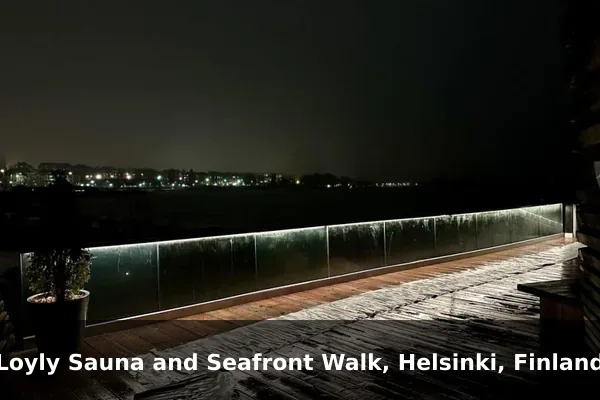
Löyly sits on the Hernesaari waterfront as both a working public sauna and a piece of considered architecture — its layered wooden exterior opens onto a terrace and private dipping platforms where visitors move between heat, cold Baltic water, and open air in a rhythm that Finns treat as maintenance rather than luxury.
After a sauna session, the seafront path along the shore connects to quieter stretches of Helsinki’s coastline where the light shifts dramatically by season — long and golden in June, low and sharp in winter — giving walkers a version of the city that belongs to residents far more than to tourist infrastructure.
Travel tip: Reserve a sunset slot in advance and pack flip-flops plus a reusable water bottle for the sauna cycle.
Best time to visit: September to March for contrast with the cold air, or June evenings for long daylight; sunset hours are best.
Ticket price: Sauna admission is usually around EUR 24-30; the seafront walk is free.
Kirstenbosch National Botanical Garden, Cape Town, South Africa

Kirstenbosch sits at the foot of Table Mountain and offers one of the most visually rewarding outdoor experiences in southern Africa without requiring any strenuous effort. The garden spans nearly 900 hectares of fynbos, proteas, and indigenous forest, framed by dramatic mountain slopes that make even a slow walk feel like an achievement.
Visitors can follow paved and gravel paths at their own pace, cross the Boomslang canopy walkway for elevated views through the treetops, or simply spread out on the lawns and watch sunbirds move between flowering plants. Seasonal blooms shift the color palette dramatically, so no two visits look quite the same.
Travel tip: Use a rideshare, wear sun protection, and bring a picnic if you want a longer but low-effort visit.
Best time to visit: September to November and February to April; clear mornings are the most comfortable.
Ticket price: Adult entry is typically around ZAR 220-250; reduced prices apply for children.
Shotover Jet, Queenstown, New Zealand

The Shotover Jet delivers one of the most concentrated bursts of excitement available in Queenstown, covering tight canyon walls and shallow river channels at speed in under 25 minutes. It requires no physical preparation or experience, making it accessible to most travelers who want a genuine adrenaline moment without committing to a full day of planning.
Passengers sit low in a flat-bottomed jet boat while the driver navigates rock faces at close range and executes 360-degree spins on open water. The canyon scenery itself is worth noting — the schist rock walls and clear turquoise water of the Shotover River make the ride visually striking even between the sharp turns.
Travel tip: Book a weather-flexible time slot and secure any glasses or cameras with a proper strap.
Best time to visit: October to April; late morning to mid-afternoon for the mildest conditions.
Ticket price: Usually NZD 169-199 per adult; family packages may be available.
Oaxaca Market-to-Table Cooking Class, Mexico

A market-to-table cooking class in Oaxaca turns a single morning into a layered food education, starting with a walk through Mercado Benito Juárez or a nearby tianguis where instructors explain how to identify fresh chiles, select tlayuda ingredients, and choose the right mole paste for different dishes. The experience connects what ends up on the plate directly to the people who grew or prepared each ingredient.
Back in the kitchen, participants grind spices on a traditional metate, toast dried chiles, and assemble dishes that typically include a mole, a masa-based preparation, and a local drink. The pace is relaxed enough to ask questions and taste as you go, which makes it genuinely instructive rather than just a cooking demonstration with an audience.
Travel tip: Wear closed shoes, arrive hungry, and confirm whether market transport and ingredients are included before booking.
Best time to visit: Year-round; weekday mornings from about 9:00 a.m. to 1:00 p.m. are most practical.
Ticket price: Usually MXN 1,800-3,000 per person; prices vary by class length and menu.
Wadi Rum Bedouin Camp Overnight, Jordan

Wadi Rum offers a scale of silence and open desert that is difficult to find elsewhere, and staying overnight in a Bedouin camp shifts the experience from a day-trip photo stop into something more grounded. The red sandstone valleys and whale-back rock formations change color through sunset in a way that rewards anyone willing to simply sit and watch without an agenda.
After dark, the absence of light pollution makes the Milky Way visible with the naked eye on clear nights, and many camps serve dinner around a fire where guides share stories about desert navigation and tribal history. The morning brings cooler air, quieter dunes, and a version of the landscape that the midday tour buses never see.
Travel tip: Pack layers, a power bank, and check whether your camp has private bathrooms and jeep transfers included.
Best time to visit: March to May and October to November; arrive before sunset and stay out after 9:00 p.m. for stargazing.
Ticket price: Protected area entry is separate; camp packages usually range from JOD 35-90 per person.
Tallinn Old Town Self-Guided Walk, Estonia
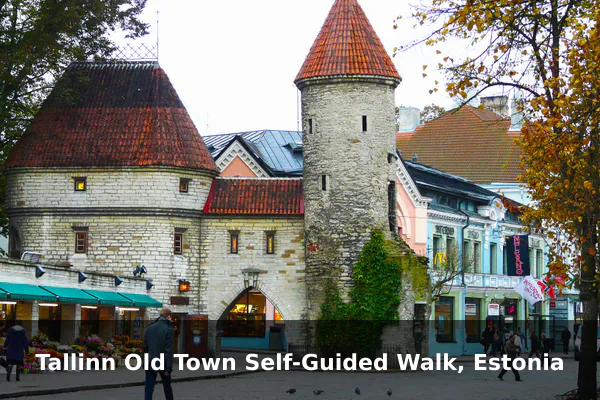
Tallinn’s medieval old town is one of the best-preserved in northern Europe, and its compact size means a self-guided walk can cover the main highlights in a few unhurried hours without needing a tour group or an app with a rigid route. The limestone buildings, Gothic church spires, and cobblestone streets have remained largely intact since the 14th and 15th centuries, which gives the area a coherence that many historic centers have lost to later development.
Walking down from the upper town through Pikk jalg and Lühike jalg reveals a shift from civic towers and viewpoints to merchant guild houses and apothecary facades at street level. Side streets open onto small courtyards, independent craft shops, and café terraces tucked into old warehouse spaces, giving independent walkers room to explore beyond the obvious landmarks without backtracking.
Travel tip: Start at Patkuli Viewing Platform and walk downhill through the old town to avoid repeated uphill climbs.
Best time to visit: May to September; weekdays; 8:00-11:00 a.m. or after 6:00 p.m. for lighter crowds.
Ticket price: Walking the old town is free; museums, towers, and churches usually charge separate small entry fees.
